
Baby Panda Animal Farm Adventure
What players say
Baby Panda Animal Farm Adventure is built for young children who enjoy animals and simple routines. The game avoids failure states and time pressure, focusing instead on feeding, bathing, collecting, and selling. Its strengths are clear task design and a gentle pace that lets kids play independently. The main limitation is that the activities are repetitive by design, so older children may lose interest quickly. It works best as an early introduction to farm-themed play and basic economics.
About
What Young Players Do on the Farm
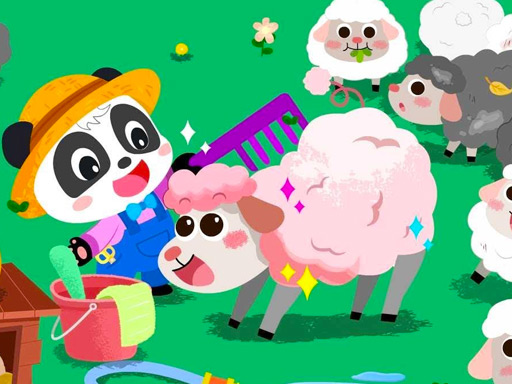
Baby Panda Animal Farm Adventure puts children in charge of a small farm in Little Pandatown. The core loop is simple: care for animals, collect what they produce, and sell it for coins. [IMG_1] Each activity is broken into clear steps, so a child can follow along without needing an adult to explain what comes next. The game is built for independent play and uses colorful graphics and interactive guidance to keep tasks understandable.
Sheep Care and Wool Collection
The first job is the sheep pen. Players feed the sheep hay to keep them healthy, then use a brush and water to give them a bath. Clean wool is worth more, so bathing is not just a decorative step. Once the wool is ready, players collect it and take it to the market to sell for coins. This sequence teaches a simple cause-and-effect relationship: care leads to a product, and the product leads to a reward.
Fishing and Honey Production
At the pond, players buy fish fry and dig for worms in the dirt to use as bait. Feeding the fry regularly helps them grow into larger fish that can be sold at the market. [IMG_2] Honey works in a similar way. Players find the beehive and learn how to collect honey safely, then sell it for additional coins. Both activities expand the farm beyond sheep and give children more ways to earn.
Coins, Choices, and Gentle Progression
Coins earned from wool, fish, and honey can be used to buy new items and expand the farm. There is no time pressure or failure state described in the game, so children can repeat tasks at their own pace. The market acts as a central hub where different products are exchanged for currency, and the shop gives players a reason to keep caring for animals. The overall structure introduces basic economics without making the process feel like a test.
Compatibility
FAQ
Comments
Sign in to comment
You must be logged in before posting a review or rating.
No comments yet. Be the first to comment!



Editorial Notes