
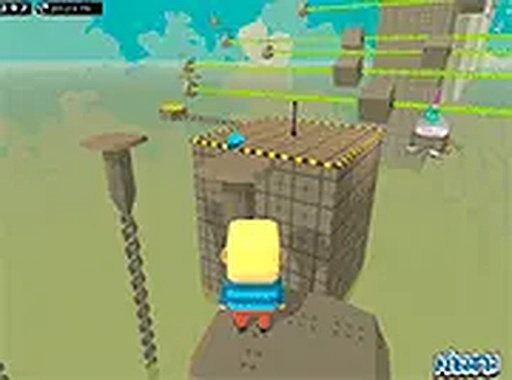
Precision Leap Challenge
What players say
Precision Leap Challenge keeps its scope narrow: jump from a start point to an endpoint across platforms that move in predictable patterns. The difficulty ramps through faster platforms and narrower landing zones, and the simple controls keep the challenge in the level design. Players who enjoy patient, observation-based platforming will get the most from it, while those seeking fast action may find the pace deliberate.
About
Jump Timing as the Core Skill
Every level in Precision Leap Challenge asks the same fundamental question: when should you jump? Platforms are either stationary or move in predictable patterns, so the challenge is not reacting blindly but reading the rhythm of each obstacle and committing to a jump at the correct moment. A mistimed leap leads to a fall, which makes observation as important as reflexes.
How Obstacles Escalate
Early stages use simple gaps and slow-moving blocks, giving players room to learn the controls without pressure. Later levels introduce faster platforms, narrower landing zones, and sections where the correct move is to wait rather than jump. This gradual increase in complexity keeps the difficulty curve steady instead of spiking suddenly.
Clear Visuals, Simple Controls
The design favors clarity over clutter. Bright, distinct colors separate safe platforms from dangerous areas, so players can plan a route at a glance. Controls are limited to basic movement keys, which means the difficulty comes from level design and timing rather than complicated input sequences. That makes the game approachable for a wide range of ages and skill levels.
Patience Beats Rushing
Charging through a stage usually ends in a fall. The more reliable approach is to pause, watch how each platform moves, and then act. Some sections reward a patient wait; others require a quick series of jumps. Learning to anticipate each obstacle's timing is what carries players through the later, more intricate stages.
Short Sessions, Repeatable Stages
Each stage is built to be finished in a few minutes, which suits short breaks or quick play sessions. The rising difficulty gives players a reason to return to earlier levels and refine their technique, and clearing a tough section provides its own motivation to continue. The game stays focused, without extra systems competing for attention.
✅ Compatibility & Testing
FAQ
Comments
Sign in to comment
You must be logged in before posting a review or rating.
No comments yet. Be the first to comment!






Editorial Notes