
Color the House Puzzle
What players say
Color the House Puzzle works best as a low-pressure activity for younger players or anyone seeking a quiet break. Its drag-to-fill mechanic is immediately understandable, and the lack of timers removes frustration. The main limitation is that the concept stays simple throughout—players who want complex puzzle systems may find it too easy. Still, the gradual increase in grid complexity and the visual reward of completing each house give it a clear, satisfying loop.
About
What You Actually Do
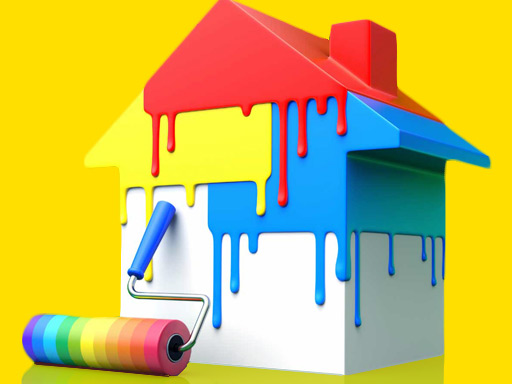
Color the House Puzzle asks players to fill every white road on a grid with color. Using a brush controlled by mouse or finger, you drag along connected paths. The color spreads automatically across the connected area, gradually turning a blank layout into a finished house. The goal is simple: complete each house by covering all white paths. There are no timers, penalties, or complex rules, so the pace is entirely up to the player.
How the Grids Get Harder
Each level presents a different house design. Early grids are straightforward, with fewer paths and clear connections. As you progress, road patterns become more intricate, requiring you to plan which sections to paint first. Because the brush fills connected areas automatically, a single stroke can cover a large portion of the grid—or leave isolated white patches if you start in the wrong spot. Restarting a level is always available if you want to try a different approach.
Controls and Accessibility
The game runs in a browser and responds to both touch and mouse input. Dragging the brush feels natural on phones and tablets, and the same mechanic works on desktop. No downloads or installations are needed. The interface stays out of the way, letting players focus on the grid itself. This makes it easy for younger players or anyone new to puzzle games to start immediately.
Who It Suits
This is a family-friendly activity built around color recognition and logical thinking. The absence of time pressure makes it suitable for short breaks or quiet moments. Young artists can practice following paths and matching colors, while puzzle fans get a low-stress challenge that grows gradually. The combination of painting and puzzle solving gives each completed house a visible sense of progress.
✅ Compatibility & Testing
FAQ
Comments
Sign in to comment
You must be logged in before posting a review or rating.
No comments yet. Be the first to comment!






Editorial Notes