
Paws & Claws: Buddy Quest
What players say
Paws & Claws: Buddy Quest excels at making teamwork feel natural and fun. The simple premise of guiding a dog and cat through platform levels becomes genuinely engaging when both players must communicate to find hidden boxes and avoid obstacles. The difficulty curve is well-paced, starting easy and gradually introducing new hazards without becoming frustrating. The browser-based design means no setup hassle, and the short level length fits perfectly into a coffee break. While the visuals are simple, they are clean and pleasant. The only limitation is the requirement for two players, but for those with a partner, this is a delightful cooperative experience.
About
Teamwork at Its Core
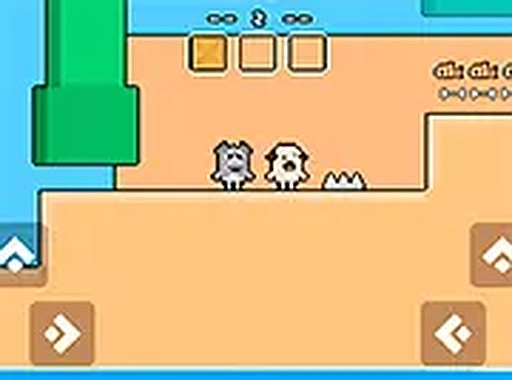
In Paws & Claws: Buddy Quest, success depends entirely on how well two players coordinate. One person controls the dog using WASD keys, while the other manages the cat with arrow keys. Each character has unique movement abilities that complement the other. The dog might jump higher, while the cat can fit into tighter spaces. Players must communicate to decide who leads and who follows, especially when crossing narrow platforms or avoiding pitfalls. This shared control system turns every level into a mini-exercise in collaboration.
Level Layout and Objectives
Each stage presents a series of platforms, gaps, and obstacles. The primary goal is to locate three hidden boxes that unlock the path forward. These boxes are never in the same spot twice, encouraging exploration. Some boxes sit on high ledges requiring both characters to stack or use timing to reach. Others are tucked behind moving barriers. Along the way, players collect fish for the cat and bones for the dog. These items add a light collection element but are not required for level completion. The layout grows more complex as players advance, introducing new hazards and requiring more precise jumps.
Accessibility and Session Design
The game runs directly in a web browser, making it instantly playable on any device with an internet connection. No installation or account creation is needed. A full-screen mode is available for a more focused view. Controls are simple and explained clearly at the start, so new players can jump in without a lengthy tutorial. Sessions are designed to be short, typically lasting a few minutes per level. This makes the game ideal for quick breaks, waiting rooms, or casual play between friends or family members.
Visual and Audio Atmosphere
The art style uses bright, clean colors with friendly character designs. The dog and cat are animated with expressive movements that convey their personalities. Backgrounds change as players progress, from sunny meadows to dark caves. Sound effects accompany jumps, collectibles, and level completions, providing clear feedback. The music stays upbeat and non-intrusive, matching the lighthearted tone. Nothing in the presentation is overly complex, but the consistent quality keeps the experience pleasant and easy on the eyes.
Progression and Difficulty Curve
Early levels introduce basic platforming and box locations. As players advance, the game introduces moving platforms, timed switches, and environmental hazards like rolling boulders or collapsing floors. The difficulty increases gradually, giving teams time to develop their communication and strategy. Later stages require precise timing and coordinated movements, but the game never feels punishing. The focus remains on cooperative problem-solving rather than reflexes alone. This balanced progression ensures that both newcomers and experienced players can find enjoyment.






Comments
Sign in to comment
You must be logged in before posting a review or rating.
No account? Create one
No comments yet. Be the first to comment!