
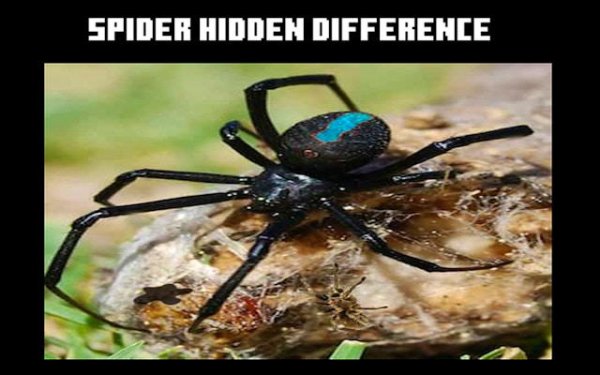
Spot the Web Differences
What players say
Spot the Web Differences delivers a straightforward observation challenge: compare two spider-themed illustrations and click the differences. The artwork uses webs, arachnids, and natural settings, with variations in leaf patterns, thread thickness, or leg positions. Difficulty rises gradually from obvious to subtle, and the lack of timers makes it suitable for short breaks or relaxed sessions. It suits players who enjoy detail-oriented puzzles and prefer a non-competitive pace.
About
Comparing Two Spider Illustrations
Each level places two nearly identical illustrations side by side. Your task is to tap or click the areas where the images differ. Successful finds are marked on the screen, and the level concludes once every discrepancy has been located. The controls respond to touch or mouse input, so the game remains accessible to anyone familiar with either.
Webs, Arachnids, and Natural Settings
The artwork centers on spider motifs: webs, arachnids, and environments such as gardens or room corners. Differences may appear in leaf patterns, the thickness of silk threads, or the position of a spider's legs. Illustrations are intricate enough to reward close inspection, yet they avoid clutter that would make scanning frustrating.
How Difficulty Grows
Early levels show obvious differences that are easy to catch. As you advance, variations become subtler, requiring careful scanning of the entire scene. This gradual increase keeps the activity engaging without becoming irritating. No time constraints are imposed, so you can pause between levels or step away entirely.
Mental Engagement and Pace
Regular play may help sharpen concentration and visual memory. Comparing two images trains the brain to notice small details while ignoring distractions. Because the game is non-competitive and self-paced, it works as a calm mental exercise during short breaks or longer relaxation periods.
Compatibility
FAQ
Comments
Sign in to comment
You must be logged in before posting a review or rating.
No comments yet. Be the first to comment!





Editorial Notes