
Neon District Breakout Arena
What players say
Neon District Breakout Arena blends battle royale pressure with arena-style positioning. The shrinking zone and multiple bunker entrances create real decisions about when to move and where to commit. Audio and visual cues give attentive players an edge without overwhelming newcomers. Item resets keep rounds fresh. The main limitation is that the source doesn't detail player counts or progression beyond matches, so it's best suited to players who enjoy short, competitive, strategy-driven rounds.
About
Supplies, Rivals, and a Closing Circle
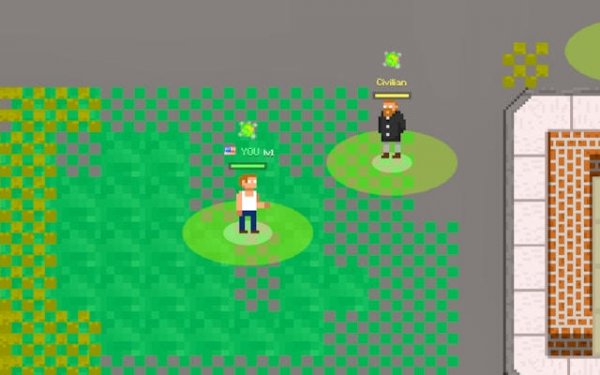
Matches in Neon District Breakout Arena start on the outskirts of a pixel town. The immediate job is simple: gather scattered supplies while keeping track of where other players are. That second part is what separates a short match from a long one. The play zone contracts over time, so every pickup and every pause carries a cost. Players who sprint toward the center without supplies often get eliminated early, while those who read the situation can slip through at the right moment.
Reading Footsteps and Screen Clues
The game leans on audio and visual signals to communicate nearby activity. Footsteps, item pickups, and small environmental changes all hint at where rivals might be. The pixel art style helps here—characters and objects stand out against the background, so movement is easier to spot even at a distance. Newcomers can pick up these cues without much trouble, but experienced players use them to plan several moves ahead.
Choosing a Bunker Entrance
The central fortified structure has multiple access points, and each one plays differently. Some routes are exposed but fast; others force players through tighter spaces with less room to react. Watching which paths others take can reveal patterns, and the game rewards players who study the layout instead of memorizing a single approach. Rushing the main entrance without a plan tends to end in a bottleneck.
Fresh Loot and Short Sessions
Item locations reset every match, so no two rounds play out the same way. That randomness pushes players to explore different parts of the map and try new strategies rather than repeating one route. Over time, a mental map of common spawn points and high-traffic areas becomes useful. Short match lengths make it easy to play several rounds in one sitting, and the competitive arena format keeps the focus on improving rather than grinding.
Compatibility
FAQ
Comments
Sign in to comment
You must be logged in before posting a review or rating.
No comments yet. Be the first to comment!





Editorial Notes