
Number Grid Island Builder
What players say
Number Grid Island Builder builds its difficulty through added rules rather than bigger numbers alone. The six worlds each introduce a distinct mechanic—loop connectivity, sliding ice, one-way arrows, orbs—so the puzzle vocabulary keeps expanding. With 240 handcrafted puzzles and a single correct solution per grid, it suits players who enjoy deduction and can tolerate a stripped-back interface. The main limitation is that the visual design stays minimal, which keeps focus but offers little atmosphere.
About
The Core Deduction Loop
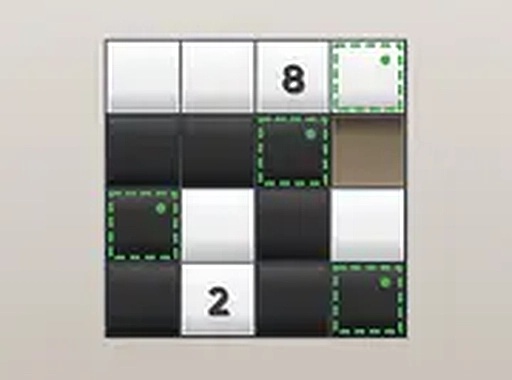
Every puzzle in Number Grid Island Builder begins with a rectangular grid. Some cells hold numbers; the rest are empty. Each number marks the exact size of the island that must occupy that cell and its neighbors. Cells not used by islands become walls, and those walls have to form a single connected path that touches the grid's edges. Islands cannot touch each other diagonally, which means every placement decision ripples outward. There is no timer and no random element—just constraints that narrow toward one correct solution.
Six Worlds, Six Rule Layers
The game spreads its 240 handcrafted puzzles across six distinct worlds, and each world adds a mechanic rather than just harder numbers. One world requires all islands to connect in a continuous loop, echoing a Yin-Yang pattern. Another introduces ice blocks that slide across the grid until they hit an obstacle, turning wall placement into a movement problem. One-way arrows force directional thinking, while collectible orbs unlock special abilities. Because each layer builds on the last, the puzzle vocabulary grows instead of resetting.
Difficulty Without Overwhelm
Early puzzles focus on island size and wall connectivity, so newcomers can absorb the core rules before anything else appears. Later grids combine multiple rule sets and demand several steps of foresight. The curve is gradual, and every puzzle has a single correct solution—trial and error is possible, but careful reasoning is faster. Grid size and layout change across puzzles, which keeps the visual pattern from becoming stale.
Interface and Skill Building
The interface stays deliberately plain: numbers sit clearly on the grid, walls draw automatically as cells are filled, and visual feedback distinguishes correct from incorrect moves. That feedback loop helps players learn from mistakes rather than guess blindly. The design supports methodical play, rewarding patience and attention to detail. Regular practice can sharpen pattern recognition and strategic planning, and the non-violent format suits both children and adults seeking a mental workout.
Compatibility
FAQ
Comments
Sign in to comment
You must be logged in before posting a review or rating.
No comments yet. Be the first to comment!




Editorial Notes